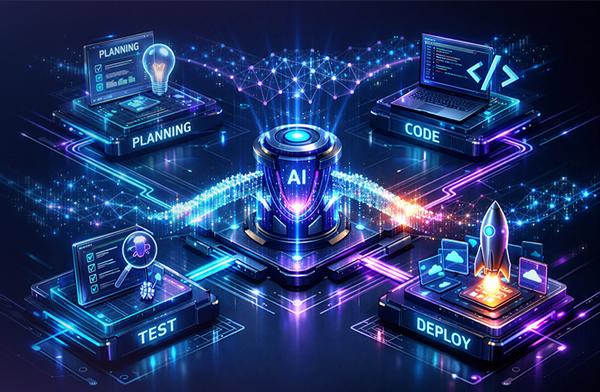



The business process outsourcing industry stands at an inflection point. What began as a simple cost-reduction strategy has evolved into something far more sophisticated—a strategic partnership model that promises to reshape how global businesses operate.
The Numbers Tell a Compelling Story
The global BPS market, valued at approximately $300–350 billion in 2024–2025, is projected to reach $525 billion by 2030, representing a robust annual growth rate of nearly 10%¹. Some analysts predict even more dramatic expansion, with estimates reaching $840 billion by 2035². This isn’t just growth—it’s a fundamental reimagining of what outsourcing means.
But here’s what the numbers don’t immediately reveal: this growth is happening despite the erosion of traditional low-cost labor advantages. The industry is thriving not because of cheaper wages, but because it’s offering something entirely different.
The Fundamental Shift: From Labor to Technology
For decades, companies outsourced for one primary reason: to access cheaper labour markets. This ‘lift and shift’ model was straightforward—move work to lower-cost locations, pocket the savings, repeat.
Today’s forward-thinking companies outsource to access better technology than they can build themselves. BPS providers are becoming technology powerhouses, deploying generative AI and hyper automation to handle complex, non-routine tasks once seemed impossible to automate. We’re talking about drafting legal documents, crafting personalized customer responses, and making nuanced decisions—not just data entry.
The expectations have evolved dramatically. Clients now demand chatbots that resolve issues rather than deflect them, AI systems that triage and summarize emails intelligently, smart routing that anticipates needs, and predictive service that fixes problems before customers even notice them. Providers are evaluated not on headcount or hourly rates, but on their technology stack, automation frameworks, and digital maturity.
This shift creates extraordinary opportunities. BPS providers are transforming into AI operations partners—fine-tuning large language models, building sophisticated automations, maintaining AI guardrails, and staffing AI operations desks. This is where the margins are moving, and where the future lies.
The Human Cloud Revolution: When AI Meets Empathy
From Reactive to Proactive Service
Here’s the paradox at the heart of BPS’s future: as artificial intelligence becomes more powerful, human expertise becomes more valuable—not less.
AI-powered predictive models now enable BPS providers to anticipate customer needs and reach out proactively before problems arise. By 2026, Gartner projects that 75% of customer interactions will be AI-powered. Yet this doesn’t spell doom for human workers. Instead, it elevates them.
As AI handles tier-one support and routine data entry, human agents are climbing the value chain. The most valuable BPS workers are no longer generalist support agents—they’re problem solvers, exception handlers, customer empathy specialists, fraud analysts, and AI supervisors. The workforce is becoming smaller, more skilled, and better compensated.
The Premium Service: Human-in-the-Loop
The industry is pivoting toward Knowledge Process Outsourcing, hiring lawyers, data scientists, and medical professionals rather than generalists. The premium service of the future is ‘AI with Human Oversight’—and clients will pay substantial premiums for guarantees that qualified humans have reviewed AI’s work, particularly in sensitive fields like healthcare and law.
This transformation is driving intense specialization. The future winners won’t be broad generalists—they’ll be focused specialists in areas like healthcare claims processing, fintech compliance, insurance underwriting, e-commerce returns management, and utilities customer experience. Enterprises increasingly favor specialist pods with deep domain expertise over a large generalist provider.
Business Transformation as a Service
Forward-looking BPS providers aren’t just running processes—they’re redesigning them. They’re simplifying workflows, eliminating waste, introducing micro-automations, reducing exception rates, and resolving root causes rather than just closing tickets. This evolution moves outsourcing as a sector up the value chain toward shared services consulting.
The opportunity extends beyond traditional outsourcing. Not every company wants to build captive centers, creating demand for modular shared services: Finance-as-a-Service, HR operations-as-a-Service, Procurement-as-a-Service, Workforce Management-as-a-Service, Analytics-as-a-Service. This opens what one industry analyst calls “the mid-market goldmine³” where scalability and speed are critical.
AI-Accelerated, Not AI-Replaced
The Augmentation Model
The narrative that AI will eliminate BPS is fundamentally flawed. The reality is more nuanced and interesting.
AI excels at volume and speed—chatbots can handle 80% of routine queries with ease. But humans remain essential for empathy, complex problem-solving, and cultural nuance. The most successful providers are upskilling their workforces for human-in-the-loop roles, where humans manage exceptions, handle situations requiring emotional intelligence, and exercise high-level judgment.
The result is striking. Organizations report 40–70% faster processing and 20–50% cost reductions when combining AI with BPS services. Productivity per agent is expected to increase 2–4x, fundamentally changing pricing models from per-full-time-equivalent to per-outcome, per-resolution, per-ticket.
The Platform Economy Arrives
Instead of hiring people, clients will increasingly subscribe to outcome-based platforms. Rather than paying for 50 payroll clerks, a client will pay a flat fee for ‘99.9% accurate payroll processing’ managed entirely by the service provider’s software and AI, with humans handling only exceptions.
Cloud platforms are accelerating this shift, with 65–80% of BPS services expected to be cloud-delivered by 2026. This enables real-time collaboration and rapid scaling, allowing businesses to respond to demand fluctuations with unprecedented agility.
Navigating the Regulatory Minefield
The regulatory landscape is becoming both a challenge and a competitive differentiator. New legislation like the EU AI Act classifies AI used in employment or hiring as high risk, requiring strict compliance measures.
BPS providers must now function as compliance shields for their clients, guaranteeing that AI tools meet global transparency and data privacy standards (GDPR, CCPA). Those that build substantial compliance capabilities command premium pricing. Clients want certified data handling, robust cybersecurity, transparent AI governance, and audit-friendly workflows. In an era of sophisticated cyber threats, the Zero Trust security model is becoming standard, along with multi-factor authentication and encrypted communication.
Compliance expertise is no longer a checkbox—it’s a core value proposition.
What 2030 Looks Like
By 2030, BPS will bear little resemblance to the outsourced call centers of the past. The industry will look more like global digital operations platforms—seamlessly blending human expertise with AI to deliver scalable, intelligent, and sustainable services.
Traditional ‘cheap labor’ is no longer a meaningful differentiator. What matters now is compliance expertise, industry specialization, digital workflows, analytics capabilities, and domain-rich shared services spanning finance, HR, supply chain, claims processing, and fraud detection.
The providers that will thrive are those investing heavily in technology, upskilling aggressively, and focusing relentlessly on outcomes. Those clinging to legacy labor-arbitrage models will struggle to survive.
How HTC Is Leading This Transformation
HTC Global Services exemplifies the strategic evolution outlined above through our comprehensive approach to next-generation BPS. The company’s competitive advantage rests on a foundation of proprietary solutions including ServiceFocus for IT service management, MAiGE accelerators for process optimization, and an IP-led delivery model that puts innovation at the center of client relationships.
Central to our strategy at HTC is the Digital Staff Accountant model, which demonstrates how specialist pods combining people, AI, and platforms deliver superior outcomes in finance operations. The FinNXT framework deploys agentic AI for autonomous financial processes, while DxNXT seamlessly connects people, processes, data, and technology across customer experience functions. DxNXT enables end-to-end document processing powered by AI, eliminating manual bottlenecks. These aren’t supplementary offerings but core differentiators essential for competing in 2026 and beyond.
HTC’s value proposition extends beyond technology. We offer integrated IT and BPO services under a single accountability framework, providing clients with holistic solutions and built-in automation and analytics. This eliminates the coordination challenges that plague multi-vendor arrangements. Our strong governance frameworks—including ORAW, FMEA, multi-level quality assurance, and audit-ready documentation—give us strategic advantage in regulated industries like healthcare, financial services, and the public sector. For our clients, this means our HIPAA expertise and ISO certifications aren’t just operational necessities; they’re revenue-generating differentiators that protect and enhance your competitive position.
Perhaps most importantly, HTC’s partner-centric approach emphasizes co-creation rather than standardized solutions. We believe in framework-based yet custom-built engagements, working alongside our clients in our co-innovation labs with flexible engagement models that ensure they receive precisely calibrated services aligned with their specific business transformation goals. We consider ourselves not merely as a vendor but as our client’s strategic partner, driving genuine business value through the convergence of human expertise and intelligent automation.
The Strategic Imperative
The future of BPS is not elimination—it’s elevation to a higher-value strategic role in the global economy. The industry isn’t shrinking; it’s upgrading.
Businesses that view outsourcing as an innovation engine rather than merely a cost center will gain the biggest competitive advantages. The question isn’t whether to embrace outsourcing, but how quickly companies can transition from transactional vendor relationships to strategic partnerships that drive genuine business transformation.
The BPS revolution isn’t coming—it’s already here. The only question is whether your organization is ready to capitalize on it.
References