

The Changing Landscape of Software Development
The discussion around the impact of artificial intelligence on software development has progressed beyond speculation.
This transformation is challenging long-standing beliefs about what it means to “write software” and compels us to reconsider the tools, workflows, and skills that have long defined the software engineering profession.
The Decline of Tool-Centric Software Engineering
For many years, software engineering has been closely tied to a set of familiar tools i.e. graphical IDEs, code editors or manual navigation through layers of frameworks, libraries, and build pipelines.
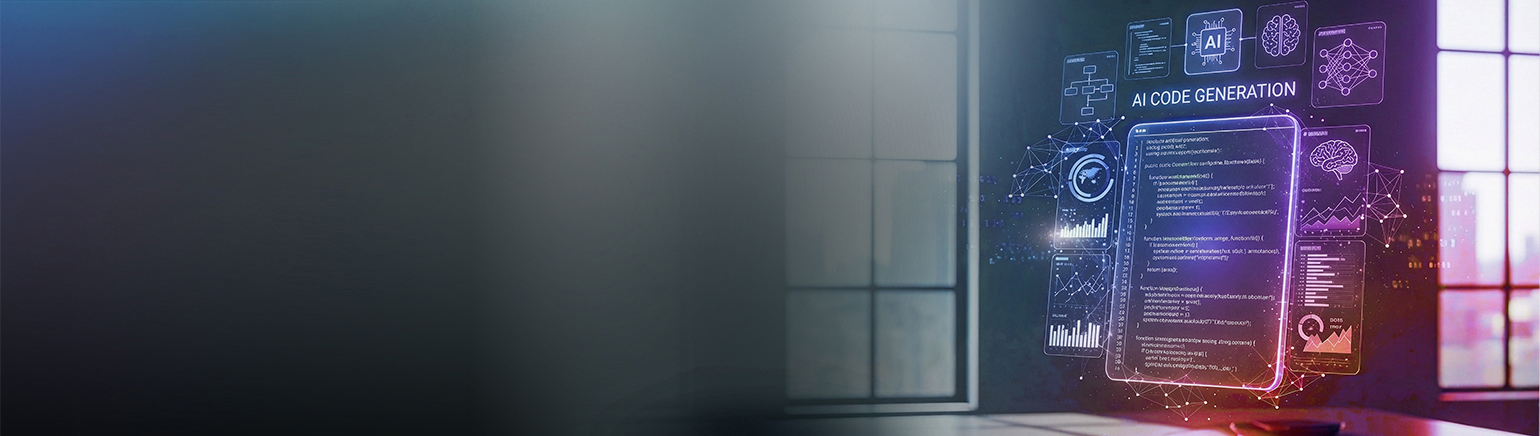
However, the emergence of AI-driven workflows is disrupting this established model. With increasingly capable AI agents, larger segments of the development lifecycle, such as code generation, test creation, service integration, and deployment management, are now being handled by AI. As a result, traditional IDEs are no longer the central hub of development activity.
Today, AI systems are more likely to interact directly with environments. This shift signifies a significant change: software creation is moving away from direct, hands-on manipulation of tools and towards the orchestration of intelligent systems.
AI Agents and the Full Development Lifecycle
The distinguishing factor in this transition is its scope. AI is no longer limited to providing autocomplete suggestions or code snippets rather AI agents are now capable of, Writing functional application code, Generating and executing test suites, Integrating services and APIs and Configuring infrastructure and deployment pipelines.
In many routine scenarios, coding as a hands-on activity has been largely automated, at least for tasks that previously took up much of an engineer’s time. The focus is therefore shifting away from manually writing every line of code and towards defining intent, constraints, and desired outcomes. A role that can best be described as the Applied AI Developer or simply, the “builder” is gaining prominence.
From Software Engineer to “Builder”
The traditional title of software engineer suggests craftsmanship at the level of code. In contrast, in an environment heavily shaped by AI, value is increasingly derived from decision-making rather than from the physical act of typing code.
The builder takes on responsibilities such as:
- Orchestrating multiple AI agents
- Clearly and precisely framing problems
- Setting architectural and product direction
- Evaluating trade-offs, risks, and quality
Code still matters, but it no longer serves as the primary differentiator. Humans remain integral to the development process, but their roles are evolving. They are now more likely to serve as reviewers rather than sole authors, architects instead of implementers, and strategists rather than syntax experts.
While only a minority of tasks are currently delegated fully to AI, this boundary is gradually expanding.
Redefining Meaningful Work in an AI-Heavy SDLC
A common misconception about this transition is the fear of becoming redundant or having nothing left to do. In reality, the challenge lies in redefining what constitutes high-impact work.
Human responsibility is shifting towards areas such as:
- System architecture and long-term design
- Product thinking and user outcomes
- Quality, safety, and compliance oversight
- Strategic decisions that balance speed, risk, and cost
In summary, judgment is becoming more valuable than execution in this new landscape.
Discomfort Is Inevitable, Adaptation Is Optional
This transformation may be uncomfortable, particularly for those whose professional identity is closely tied to specific IDEs, programming languages, or manual coding expertise.
As AI accelerates the pace of change, established workflows and skills may quickly feel out of date. Waiting for a new, stable normal is risky, as the only constant is the ongoing pace of change itself.
The most resilient developers and testers will be those who:
- Experiment early with AI-driven workflows
- Stay curious about new abstractions
- Learn to collaborate with AI, rather than compete with it
The objective should not be to cling to outdated practices, but to actively shape new ones.
Beyond Software: A Broader Shift in Knowledge Work
The consequences of this transition reach far beyond the domain of software engineering. If AI agents can take over much of the routine execution involved in coding, similar trends are likely to emerge in other white-collar fields, including analysis, documentation, operations and planning and coordination.
As a result, roles will increasingly shift away from narrow task execution and towards Orchestration, Integration and human judgment applied to AI-generated outcomes.
The debate about coding tools is, in essence, a reflection of a much broader question – How will work be organised when intelligent systems are built into everyday workflows?
A Societal Conversation, not a Vendor Story
It is important to recognise that this transformation is not about any single company, tool, or product. Rather, it represents a foundational shift at both the societal and professional levels.
Although the precise timeline for the decline of traditional coding tools is uncertain, one thing is clear: AI will not simply be an add-on to software development. It will become a central collaborator.
Those developers, testers, architects, and leaders who recognise this shift and act proactively will be best positioned to shape the future of the industry, rather than merely respond to it.
Practical and Structured Collaboration
HTC’s strategy revolves around a disciplined approach to AI integration. By empowering all associates simultaneously, HTC ensures a unified and consistent adoption process. This collaborative effort extends to client partnerships, where HTC provides hands-on support to help clients embed AI solutions that are both effective and tailored to their operational needs.