

This blog presents a strategic approach to modernization by combining Strangler Fig Architecture with Micro-frontends, offering a phased, low-risk pathway to digital agility. It explores how this dual approach enables seamless backend and frontend transformation, ensuring minimal disruption and immediate user impact. The blog further details HTC’s implementation strategy, best practices, and potential pitfalls, providing a comprehensive guide for enterprises seeking to modernize their legacy systems.
Monolithic legacy applications, once the foundation of enterprises, have now turned into anchors, holding them back from agility and innovation. With almost 87% of enterprises planning modernization initiatives, these systems are now bottlenecks. Their tightly coupled architecture makes scaling, updating, and integrating with modern technologies slow and complex. Therefore, organizations need a plan for strategically phasing out monoliths before they can completely transform.
A full-scale “big-bang” rewrite may seem like a fresh start, but it comes with high stakes—extended downtime, budget overruns, and even project failure. Instead, incremental modernization provides a more prudent, lower-risk alternative. By progressively replacing legacy components, businesses maintain operational continuity while simultaneously evolving their systems. To bridge this gap, organizations need a dual approach that combines gradual backend transformation with flexible frontend evolution. This is where Strangler Fig Architecture and Micro-frontends become invaluable, facilitating seamless transformation without disrupting a full rebuild.
Strangler Fig architecture: A step-by-step evolution
Strangler Fig Architecture employs a strategic, phased approach to legacy system transformation. Similar to how a strangler fig vine gradually envelops and replaces a host tree, this pattern creates a parallel, modern system that systematically substitutes the older one, feature by feature. This process ensures seamless integration with the existing system, minimizing disruptions.
Deploying changes in manageable increments allows businesses to maintain operational continuity, cultivate agility, and respond effectively to market demands. The pattern’s strength lies in its ability to support continuous delivery and minimize downtime. The inherent coexistence of legacy and modern systems ensures a smooth transition, preventing costly disruptions.
The benefits of the Strangler Fig are best realized through a structured and deliberate implementation. This phased approach is particularly well-suited for organizations seeking to modernize with minimal disruption in sectors such as:
- E-commerce: Facilitating the migration of product catalogs, checkout flows, and user profiles.
- Banking and financial services: Enabling the modernization of transaction processing and account management systems.
- Enterprise applications: Enhancing internal portals and customer-facing tools.
Micro-frontends: Breaking the monolithic UI
Parallel to the Strangler Fig’s approach to backend modernization, Micro-frontends offer a robust strategy for the frontend. This architectural style dissects the frontend into smaller, independently deployable modules. Consider a complex e-commerce site, where separate Micro-frontends manage product listings, shopping carts, and user profiles. Micro-frontends utilize technologies like client-side composition to achieve seamless integration, employing frameworks such as single-spa and Module Federation (Webpack) to dynamically assemble UI components within the browser.
In content-heavy applications, server-side composition ensures a unified user experience by pre-rendering or composing UI elements on the backend. Micro-frontends extend the microservices philosophy to the front end, enabling teams to independently develop, deploy, and scale UI components. This allows businesses to divide the interface into self-contained modules, which can be updated or replaced without affecting the entire application, resulting in increased agility and faster time-to-market.
This enhanced flexibility yields clear advantages:
- Parallel development: Multiple teams can work on distinct UI components concurrently.
- Independent deployments: UI modules can be updated without redeploying the entire front end.
- Improved user experience: Faster iterations and enhanced performance.
Strangler Fig meets Micro-frontends: A synergistic evolution
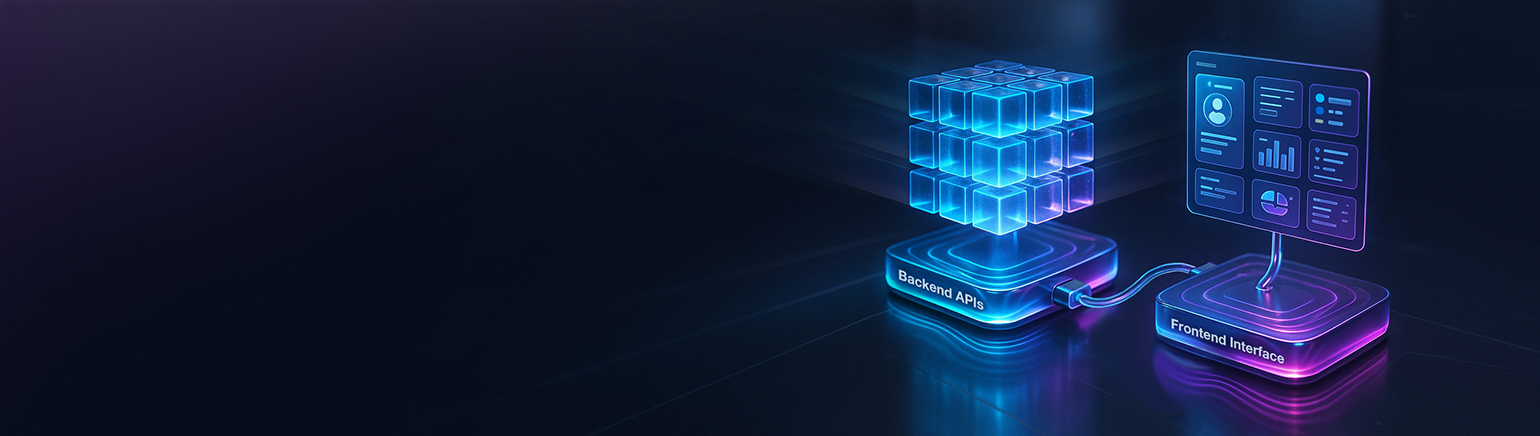
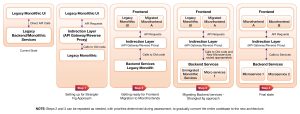
The true potential of transformation is realized when the Strangler Fig and Micro-frontends are strategically combined. This synergistic approach enables holistic modernization, facilitating the simultaneous migration of backend services and frontend components. Imagine modernized backend APIs seamlessly powering contemporary user interfaces deployed in tandem. This eliminates the complexity of disjointed upgrades, reducing complexity through incremental improvements at both layers and circumventing the constraints of monolithic systems. Most importantly, users experience immediate impact as new features are deployed and performance enhancement is noticed, delivering a tangible return on modernization investments.
Implementation strategy
A structured approach is key to ensuring a smooth and risk-mitigated transition from monolithic to modern architectures. The following phased strategy enables organizations to modernize efficiently while maintaining operational stability:
- Assessment & Planning – Identify high-impact features or domains to tackle first, ensuring modernization efforts focus on areas that drive the most value.
- Building the First Microservice & Micro-frontend – Develop the initial microservice and its corresponding UI module in parallel, creating a cohesive foundation for further modernization.
- Routing & Traffic Management – Implement API gateways and front-end composition techniques to seamlessly redirect traffic and rigorously test new components before full deployment.
- Coexistence & Retirement – Run legacy and modern systems side by side, gradually phasing out outdated components as confidence in the new architecture grows.
This incremental approach minimizes disruptions, allowing businesses to transition to a scalable, future-ready architecture without the risks of a full-scale rewrite.
Best practices for success
Ensuring a smooth transition to a modern architecture requires careful planning and execution. Key best practices include:
- Design consistency – Maintain a cohesive look and feel across micro-frontends to provide a unified user experience.
- Observability & monitoring – Implement comprehensive logging, tracing, and performance metrics to track both legacy and modern systems.
- Strategic data management – Handle shared databases efficiently while transitioning to domain-specific storage.
- Controlled releases – Use feature flags, canary releases, and blue-green deployments to enable phased rollouts and minimize risk.
This approach ensures stability, scalability, and a seamless user experience throughout modernization.
Addressing potential pitfalls & challenges
A well-planned modernization strategy helps mitigate common pitfalls. Key focus areas include:
- Overlapping Responsibilities – Clearly define roles and maintain strict boundaries between legacy and modern services to prevent conflicts and inefficiencies.
- Fragmented User Experience – Ensure seamless coordination of design systems and user flows to maintain consistency across the evolving architecture.
- Prolonged Hybrid State – Set clear decommission milestones and adhere to them, preventing an indefinite partial migration.
By proactively managing these challenges, organizations can execute a smooth, structured, and efficient modernization journey.
The way forward
The combined application of the Strangler Fig Architecture and Micro-frontends offers a secure and iterative pathway to modernization, providing leaders with a structured and risk-mitigated approach to digital transformation.
HTC advocates for initiating modernization with a focused pilot project on a small, high-value feature, demonstrating the tangible benefits of our approach. This initial success will serve as a foundation for scaling up, facilitating the transformation of the entire legacy system. Leveraging our deep expertise in architectural assessment, targeted microservice development, and modular frontend component creation, we empower clients to effectively orchestrate traffic routing, ensure seamless integrations, and manage controlled rollouts. This reduces risk, accelerates modernization, and enhances user experiences across all channels, ultimately driving successful digital transformation.